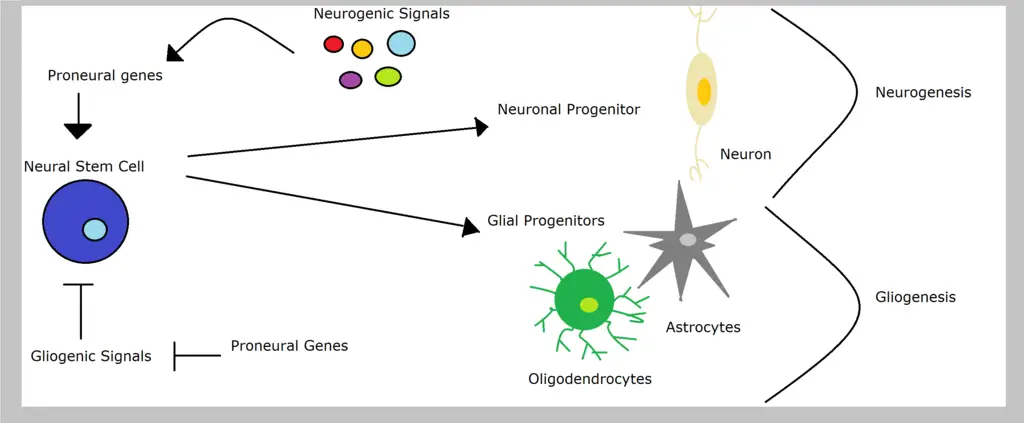
Natural selection among neural progenitor cells controls mammalian Biology Diagrams Over time, these neural progenitor cells undergo temporal progression with respect to two properties (Fig. 1a). The first is the decision whether divisions are purely proliferative (expansive) or not. (Cdk) inhibitor arrests the cell cycle of cortical progenitor cells, and also leads to precocious differentiation 27. Therefore, the
Here, we first introduce the modes of proliferation in neural progenitor cells and summarise evidence linking cell cycle length and neuronal differentiation. Second, we describe the manner in which components of the cell cycle machinery can have additional and, sometimes, cell-cycle-independent roles in directly regulating neurogenesis
Visualizing Cell Cycle Phase Organization and Control During Neural ... Biology Diagrams
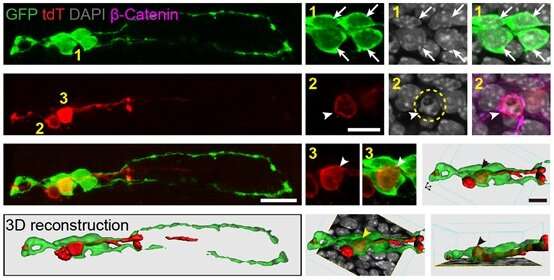
Cortical neurons and glia are generated by neural progenitor cells during development. Ensuring the correct cell cycle kinetics, fate behavior and lineage progression of neural progenitor cells is essential to determine the number and types of neurons and glia in the cerebral cortex, which together constitute neural circuits for brain function.

The time taken by neural stem cells and intermediate progenitor cells to transit through the cell cycle, and number of times they divide, is essential information to understand how new neurons are produced in the adult rodent brain. Inferred lineage and cell cycle parameters for V-SVZ progenitor cells. Data suggest that after the initial

Cell cycle and lineage progression of neural progenitors in the ... Biology Diagrams
1. Introduction. Neural stem and progenitor cells are the building blocks of the brain. In the embryo, these cells are located in proliferative zones and produce a variety of neurons and glia through tightly regulated processes that result in the generation of the diversity and complexity of the cellular phenotypes found in the adult brain [1 - 8]. Importantly, our findings, together with observations on isolated neuronal progenitors in culture (Lukaszewicz et al., 2002) and transgenic mice (Hodge et al., 2004), suggest that shortening the cell cycle of neural progenitor cells should prevent their differentiation. This may be a crucial aspect for somatic stem cells in general, which have This concept is referred to as the radial unit hypothesis; it posits that a radial glial cell (neural progenitor) not only sequentially generates neurons, but also serves to guide neurons out of the VZ along long processes. Cell Cycle 10, 4026-31. doi: 10.4161/cc.10.23.18578. [PMC free article] [Google Scholar] Chen B, Schaevitz LR
